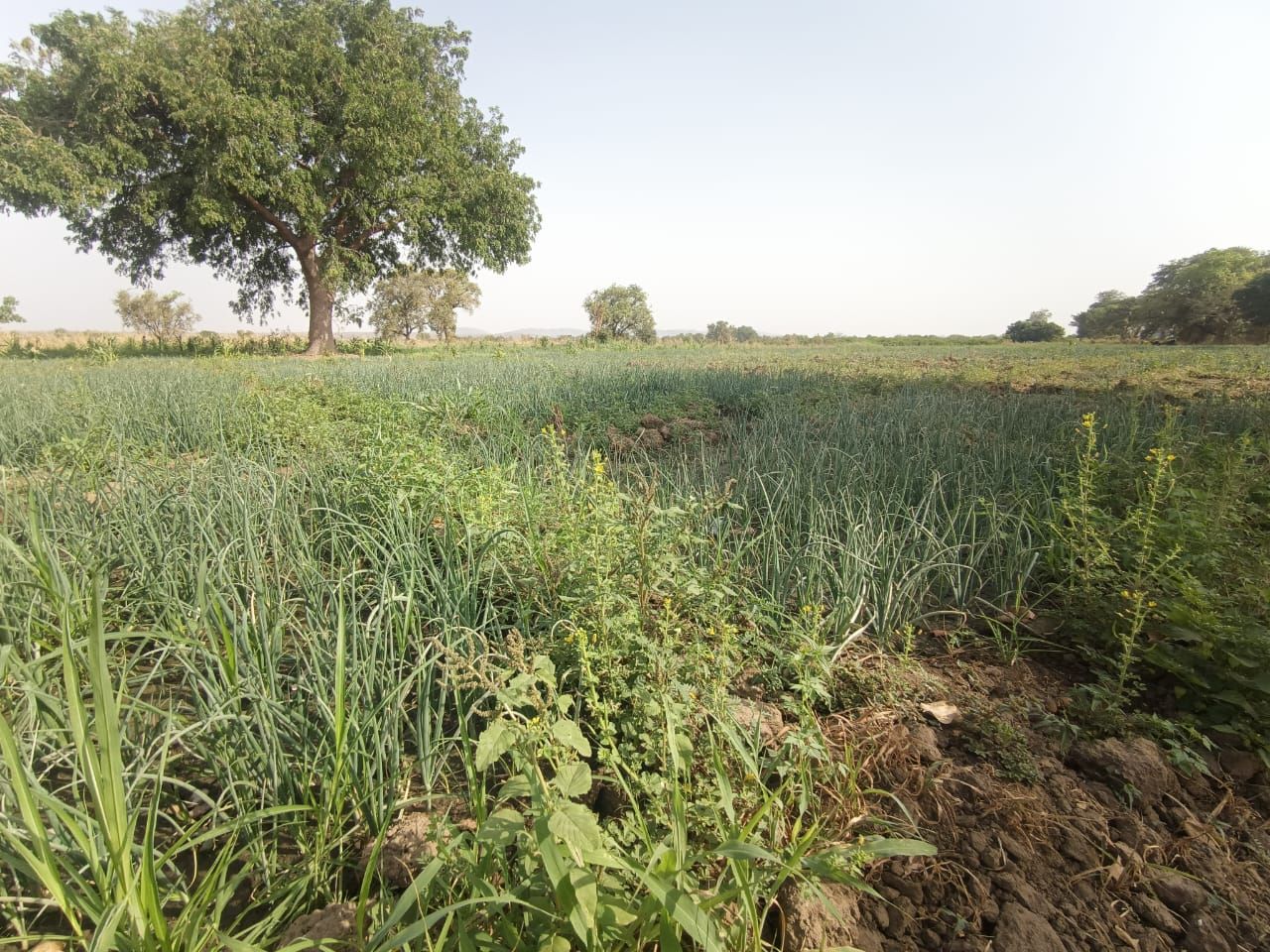
Cycle 1 was our first season working with outgrowers at Pwalugu, in the
Talensi District of the Upper East Region — a dry-season, irrigated onion
crop grown the way the local farming team have long grown it themselves,
rather than a method we brought in. It taught us more than any cycle
since.
It started with the land itself: the plot sat close to the waterside,
which looked like an asset, but came with a persistent nutsedge grass
problem that wasn’t flagged clearly enough before we took it on. Clearing
and controlling it became an ongoing task through the season, and it’s
now something we screen for much more rigorously before committing to a
new plot.
The nursery phase was the costliest lesson. We leaned on a personal
connection to raise it rather than running it ourselves end-to-end, and
corners were cut we shouldn’t have accepted — under-seeding relative to
what the plot needed, no fungicide seed treatment, and a thinner feeding
programme than the crop needed early on. That led to real losses once the
seedlings went to field, and a rushed, expensive scramble to buy in
replacement seedlings from other farmers at short notice. It’s directly
why later cycles have gone in with enough seedlings sourced up front, plus
a buffer.
Harvest was brought forward earlier than we’d have liked, partly to avoid
a repeat of the previous season’s harsh late rains — rains that, this
time, never really came — and partly because some of the bought-in
seedlings weren’t at the transplanting stage we wanted, so timelines
shifted regardless. Without storage of our own, the crop had to move
straight to market, and we came away from the sale process with a clearer
picture of how exposed that leaves a farmer at the point of sale. Storage
is still the goal — and building direct buyer relationships beyond the
local market, ahead of harvest rather than after it, is one of the
concrete changes that’s come out of this cycle.
The nursery lessons from this cycle also fed into a peer-reviewed study
on planning seedling density for smallholder farms — read more in
our news post.